


19 Jun Rosewood, Florida: A Legacy of Freedom, Resilience, and Tragedy
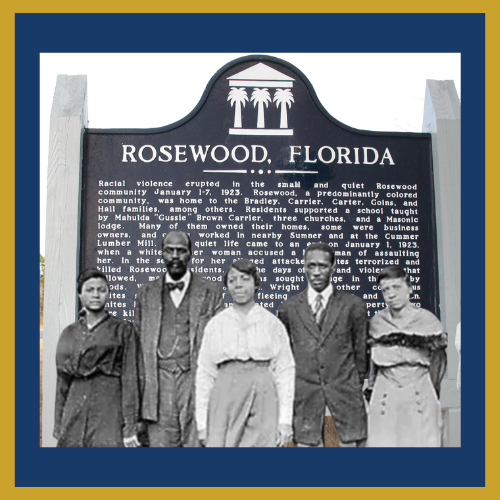
In the quiet heart of Levy County, Florida, the town of Rosewood once stood as a powerful symbol of Black resilience and prosperity. Founded in the aftermath of the Civil War and the formal emancipation of enslaved African Americans, Rosewood emerged in the late 1800s as a thriving, self-sufficient Black community. Born from the promise of freedom, Rosewood was built on land
reclaimed from oppression, where formerly enslaved families worked tirelessly to build businesses, churches, schools, and homes; a beacon of what Black progress could look like in the Jim Crow South.
By the early 1920s, Rosewood had become a thriving Black Wall Street in its own right, with lumber mills, general stores, and proud homeowners. It stood as a testament to what Black economic independence could achieve, despite the deep-seated racism that lingered in the surrounding areas. Yet, in January 1923, this community’s promise was violently shattered. A false accusation by a white woman in a neighboring town ignited days of racial terror. White mobs descended upon Rosewood, burning homes to the ground, murdering residents, and forcing survivors to flee into the swamps with only the clothes on their backs.
The massacre not only decimated a vibrant town, but also silenced generations of Black voices and erased Rosewood from public memory for decades. Today, as we reflect on Juneteenth and the broader history of emancipation, the story of Rosewood reminds us that freedom did not end with slavery. It demanded ongoing protection, recognition, and reckoning. Remembering Rosewood is more than honoring the past; it is a call to reclaim the dignity, brilliance, and strength that Black communities have always embodied, even in the face of unimaginable loss.